Skin diseases A-Z Skin diseases S – Z

Spider Naevus

Image

A spider naevus (spider angioma, naevus araneus) is a common benign vascular lesion in the skin. Spider naevi are often seen in children and young adults.

What does it look like?
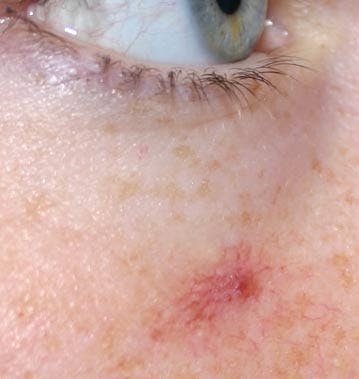
The lesion consists of a central red elevation (the ‘body of the spider’), usually about the size of a pinhead. Fine blood vessels radiate outward from this center (the ‘legs of the spider’).

  • The redness can be blanched: pressing on the spot temporarily forces the blood out of the vessels. When released, the vessels refill immediately.
  • Spider naevi most commonly appear on the face.

Who gets it?

  • Spider naevi can occur at any age but are most commonly seen in children and young adults.
  • They frequently occur in pregnant women.
  • In other adults, they are less common but may sometimes be associated with underlying conditions such as liver cirrhosis.

How does it form?
A spider naevus forms due to the local dilation of a small blood vessel in the skin. The exact cause of this dilation is unknown.

How is it diagnosed?
The diagnosis is straightforward and based on the characteristic appearance of the lesion. Spider naevi are easily identifiable with the naked eye.

How is it treated?
While spider naevi are completely harmless, treatment is often requested for cosmetic reasons. Spontaneous resolution may occur in young children or pregnant women. If treatment is desired, there are two main options, depending on the size of the lesion:

  1. Coagulation:
    • Suitable for spider naevi with a larger central vessel.
    • A small needle is inserted into the central vessel, and an electric current is used to cauterize it.
    • The remaining radiating vessels can then be treated with a vascular laser.
    • Note: coagulation may leave a small scar.
  2. Laser treatment:
    • For smaller spider naevi, vascular laser treatment is the best option.
    • Laser treatment generally does not cause scarring.

Both methods are effective, with laser treatment preferred for smaller lesions or cosmetically sensitive areas.
Image

photo: spider naevus near the lower eyelid.

Consultation types

Walk-in Consultation

A walk-in consultation allows you to have a real-time video consultation with the doctor without a prior appointment. You will enter a virtual waiting room, and the dermatologist will attend to you as soon as possible.

E-mail advice

Email advice allows you to receive a professional assessment from a certified dermatologist via email within two working days. Based on your input or AI assessment, the doctor will provide their evaluation and recommendations in writing. Email advice is limited to written guidance. If your situation requires further treatment steps to be arranged, the doctor will recommend a video or walk-in consultation instead.

Physical Consultation

A physical consultation involves an in-person visit to the doctor's clinic or designated location. You will have the opportunity to discuss your skin concerns face-to-face and receive a thorough examination and treatment plan.

Video Consultation

A video consultation allows you to have a remote appointment with the doctor via a secure video platform, from the comfort of your own home. Because the consultation takes place in real time, the doctor can discuss your skin concern in more detail and arrange any further treatment steps directly during the appointment.

We are very sorry!

This consultation type is currently not available for this doctor.

0
Would love your thoughts, please comment.x
()
x
Derm2check
Privacy Overview

This website uses cookies so that we can provide you with the best user experience possible. Cookie information is stored in your browser and performs functions such as recognising you when you return to our website and helping our team to understand which sections of the website you find most interesting and useful.